LEGALITY
Legality
Understanding the Legal Aspects of Sheep & Goat Farming


Why Legal Compliance Matters
Legal compliance is a fundamental part of successful and responsible livestock farming. Following the applicable regulations, maintaining accurate farm records, and adopting ethical farming practices help create a trustworthy and sustainable farming business. Proper compliance not only protects animal health and welfare but also strengthens farmer credibility with customers, buyers, and government authorities.
By keeping essential documents up to date, following recommended vaccination schedules, and adhering to transportation and biosecurity guidelines, farmers can reduce operational risks and improve overall farm management. Staying informed about local regulations and industry best practices also opens opportunities to participate in government schemes, training programs, and livestock development initiatives.
Ultimately, legal compliance is more than meeting requirements—it reflects a commitment to responsible farming, long-term business growth, and building a stronger future for the livestock farming community.
Weekend Farming
Essential Legal Requirements
Understanding and following essential legal requirements helps livestock farmers operate responsibly, maintain proper documentation, protect animal welfare, and build a trustworthy farming business for long-term success.
Farm Registration
Register your livestock farm with the appropriate authorities whenever required to ensure legal recognition and smooth business operations.
Livestock Identification
Maintain proper identification records for sheep and goats to support traceability, ownership verification, and effective herd management.
Vaccination Records
Keep accurate vaccination and health records to protect livestock, meet regulatory requirements, and reduce disease risks.
Animal Health Certificates
Maintain valid health certificates issued by authorized veterinary professionals whenever required for animal movement, sale, or breeding purposes.
Transportation Guidelines
Transport livestock safely by following approved transportation guidelines that ensure animal welfare and comply with applicable regulations.
Sales & Purchase Records
Maintain accurate purchase invoices, sales records, and transaction details to improve farm management and support legal documentation.
Responsible Livestock Farming
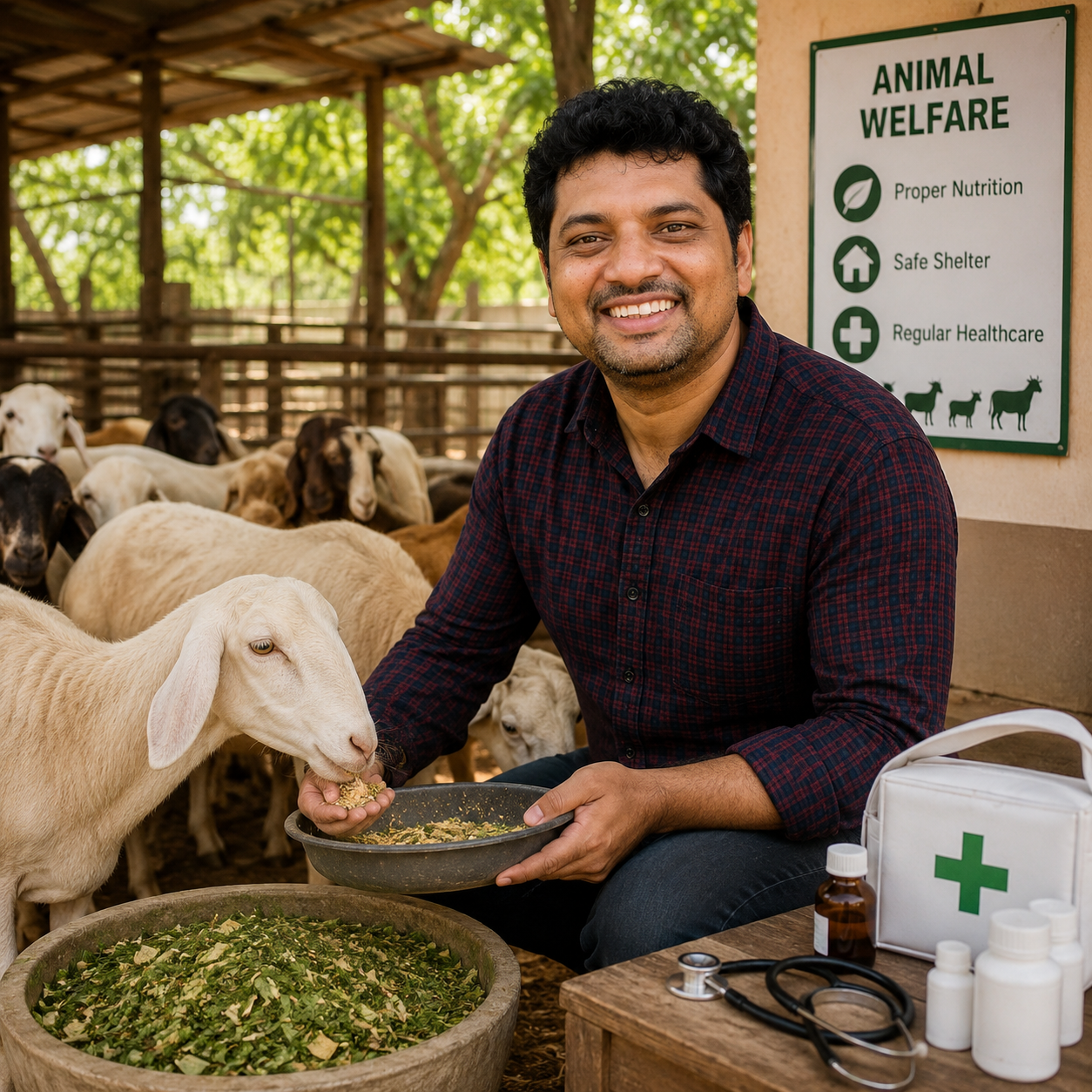
Animal Welfare
Provide proper nutrition, shelter, and healthcare.
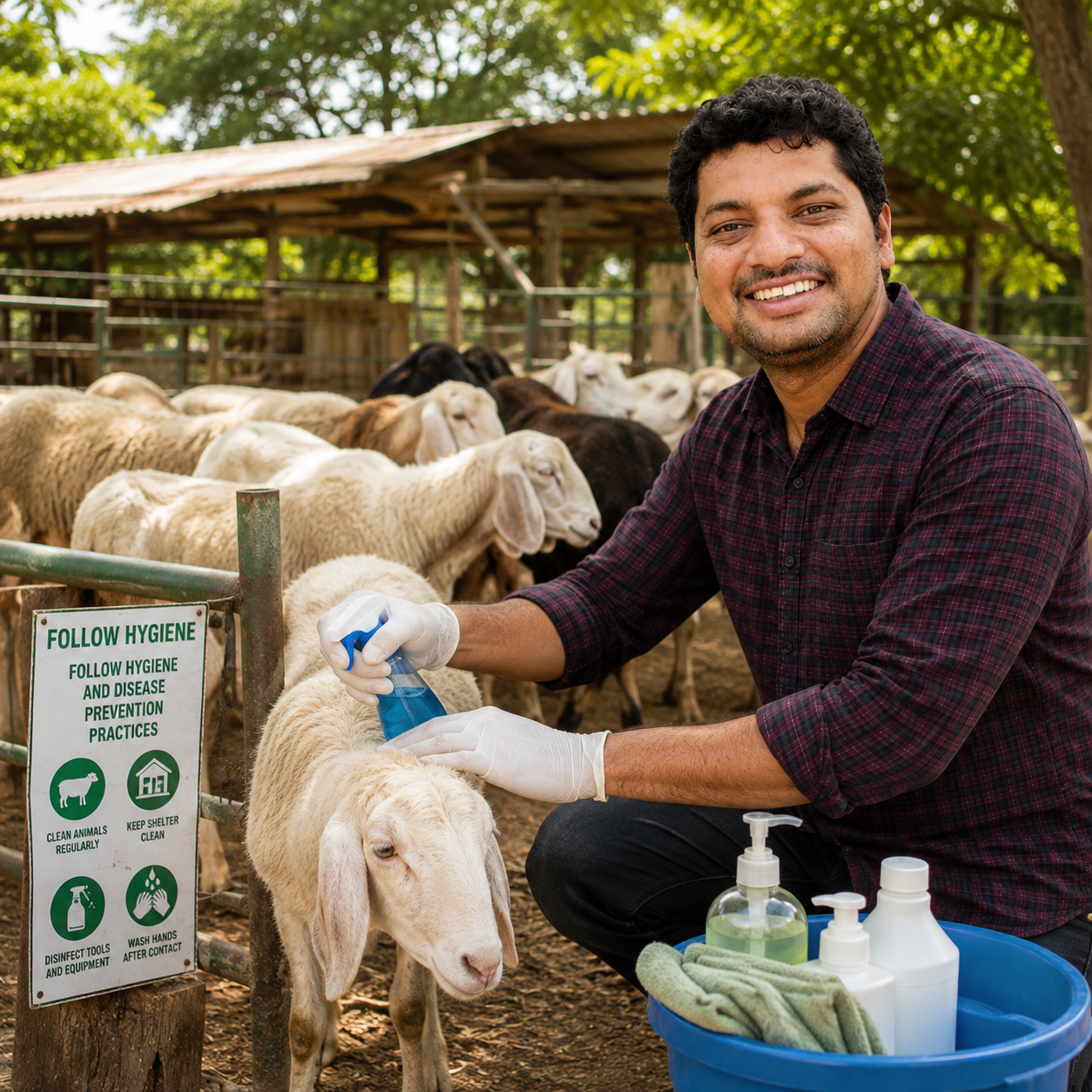
Biosecurity
Follow hygiene and disease prevention practices.

Record Keeping
Maintain vaccination, breeding, and purchase records.
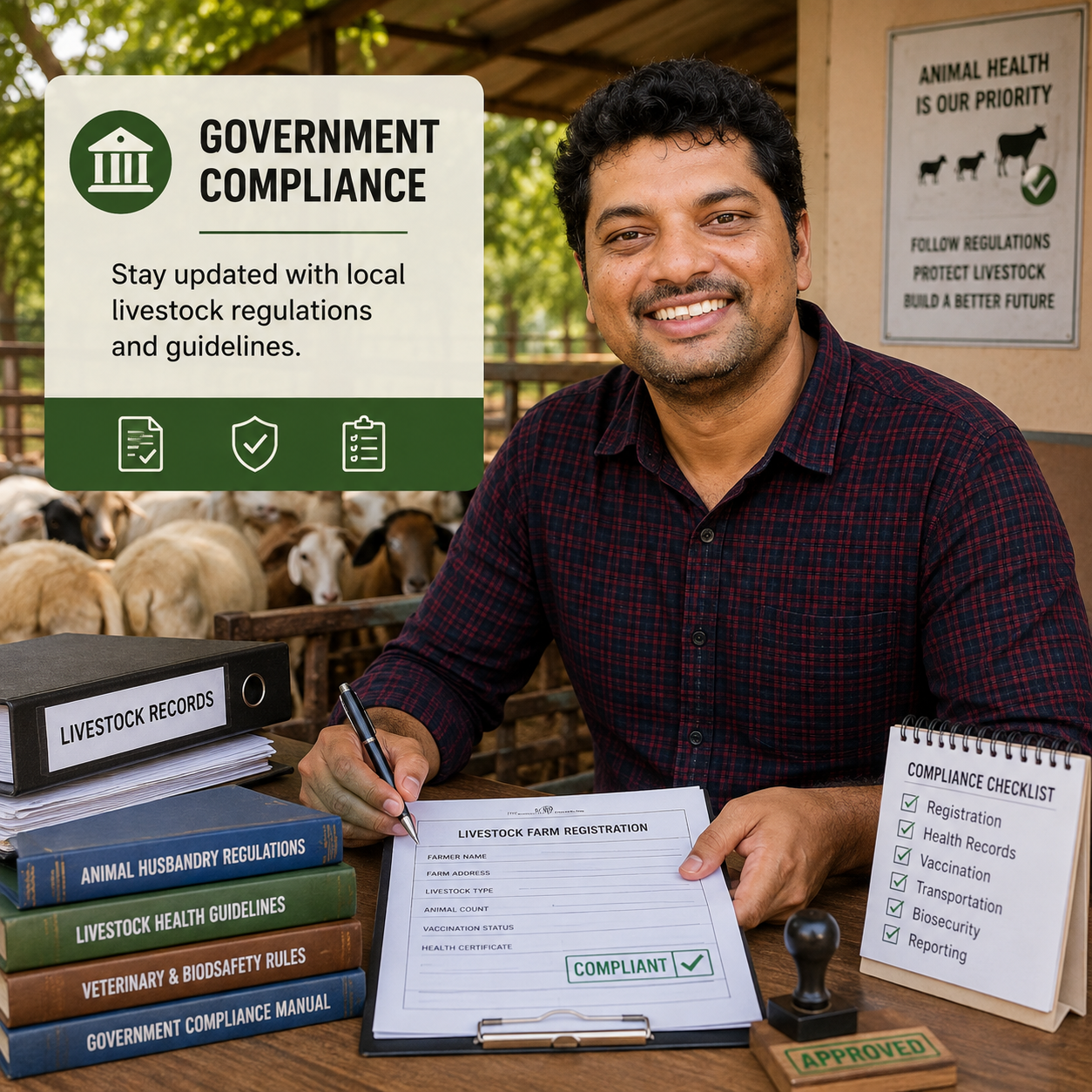
Government Compliance
Stay updated with local livestock regulations and guidelines.
LEGAL AWARENESS FOR RESPONSIBLE FARMING
Frequently Asked Questions
Is farm registration necessary?
Farm registration requirements vary by location, so always follow the regulations and guidelines applicable in your area.
Why are vaccination records important?
Vaccination records help protect livestock health, prevent diseases, and ensure proper farm management.
What documents should every livestock farmer maintain?
Every livestock farmer should maintain vaccination, breeding, purchase, health, and sales records for effective farm management.
How can Weekend Farming help me?
Weekend Farming provides practical training, expert guidance, and consultancy to help you build a successful livestock farming business.